Cash stuffing for beginners.
Cash stuffing is the oldest budget there is: divide your pay into envelopes and spend only what's inside. Here's how to start, from your first payday to your first empty envelope.
Updated 21 October 2026
What cash stuffing is
On payday you split your pay into labelled envelopes, one for each kind of spending: Groceries, Transport, Eating Out, Fun Money. When you buy groceries, the money comes out of the Groceries envelope. When an envelope is empty, that spending stops until next payday, unless you choose to move money across from another envelope.
It works because the decisions happen before the spending. Instead of checking one big bank balance and hoping, you can see exactly what's left for each part of your life. Envelope budgeting is the same method without the physical cash; the rules don't change.
Step 1: know what lands each payday
Write down what actually reaches your bank each pay, after tax, and how often it comes: weekly, fortnightly or monthly. A rough number is fine to start. If your pay changes each time, use a low, typical amount, so you're never budgeting money that might not arrive.
Step 2: take out the must pays
List what has to be paid each pay period no matter what: rent or mortgage, power, phone, insurance, loan repayments. Convert them to your pay cycle (if you're paid fortnightly, here's how). What's left is the money your envelopes share.
Step 3: pick five to eight envelopes
Start small. Too many envelopes is the most common reason beginners give up: every spend becomes a decision about which tiny envelope it belongs in. Groceries, Transport, Eating Out, Fun Money and one for bills is plenty for a first month. Envelope budget categories has a fuller list and how much to put in each.
Step 4: give every dollar an envelope
Share your pay out until nothing is left unassigned. Anything left over goes to a savings goal or a debt, not into a vague "spare" pile, because spare money is the money that disappears. Always include a Fun Money envelope: a budget with no room for small treats gets broken, and then abandoned.
Step 5: stuff your envelopes on payday
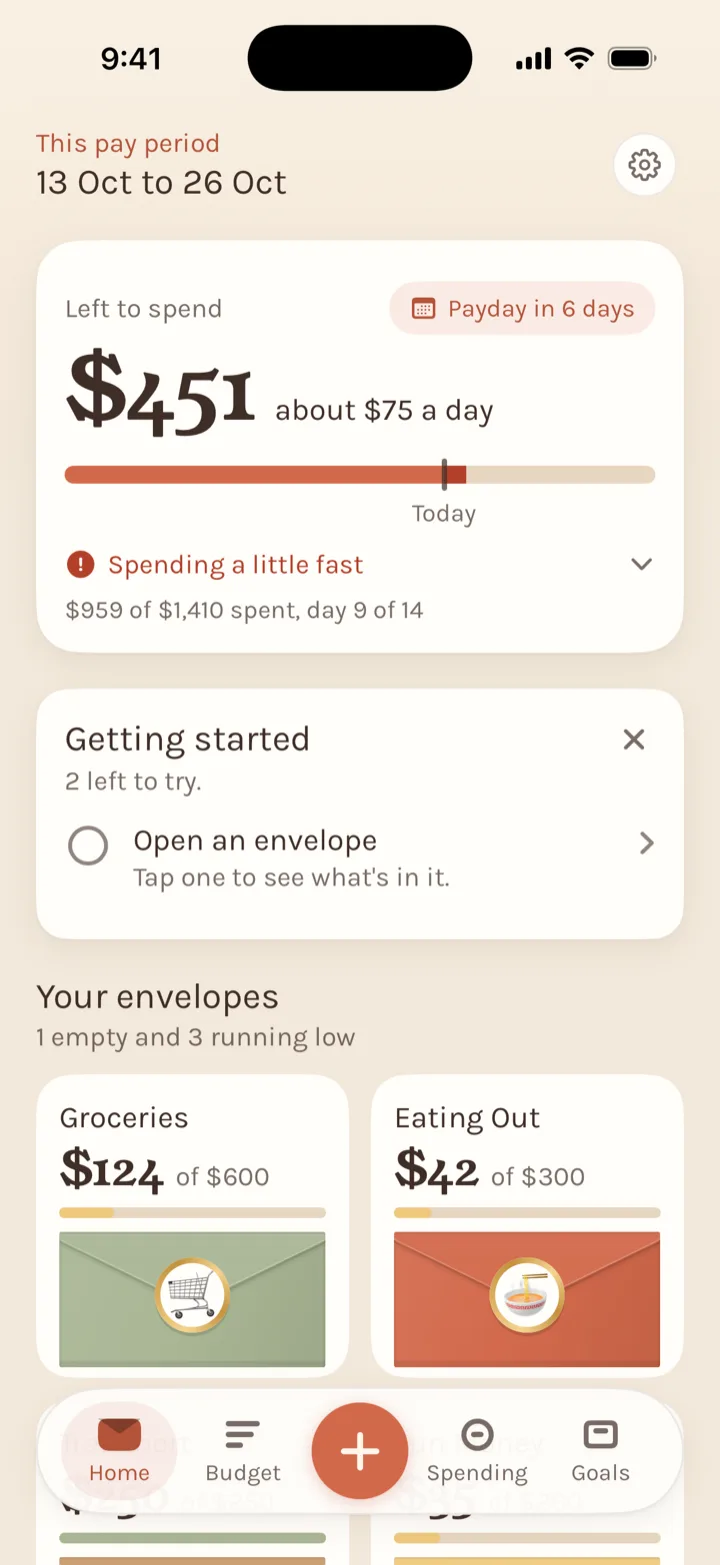
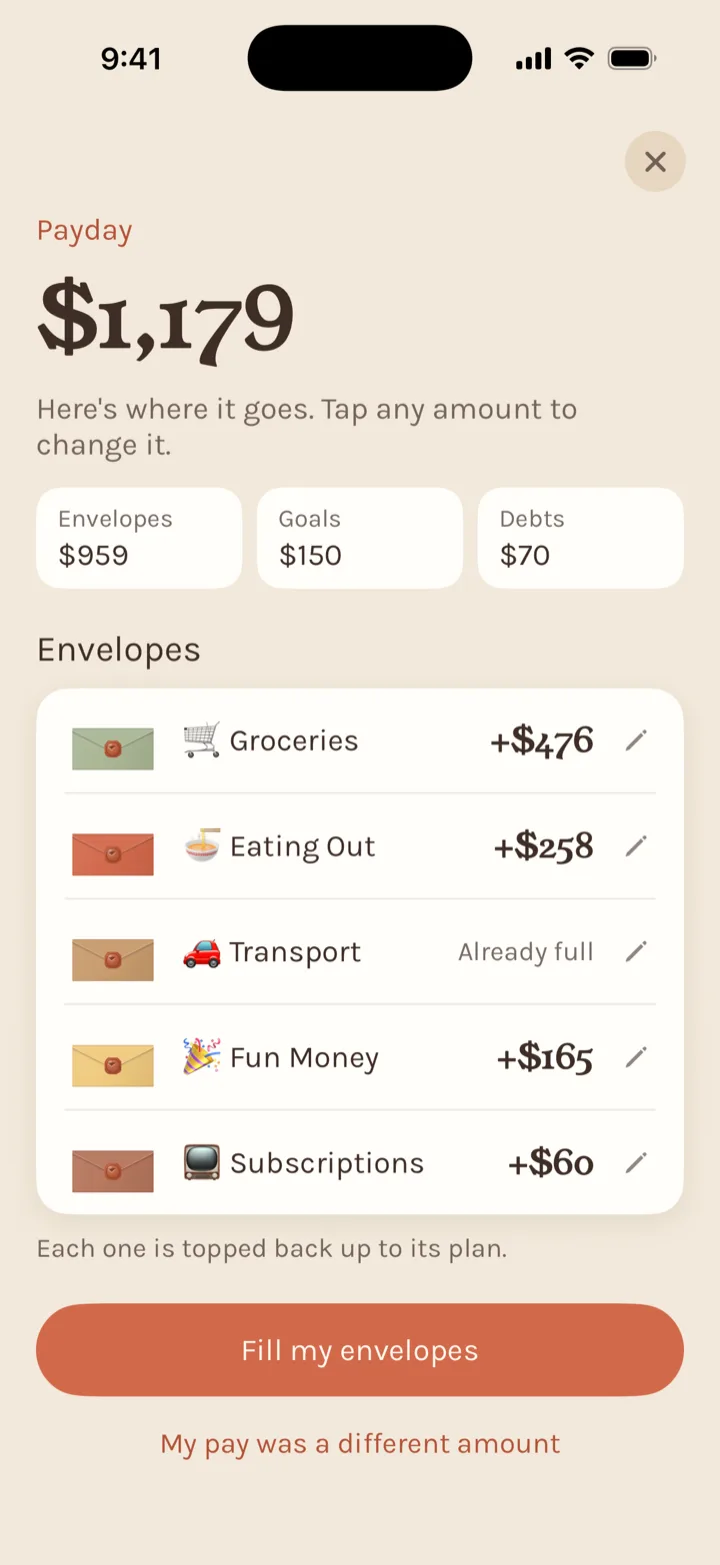
On payday, fill each envelope to its amount. If an envelope still has money in it from last time, you only top it up. Bills and goals get their share first, then the everyday envelopes.
Step 6: spend from the envelope, every time
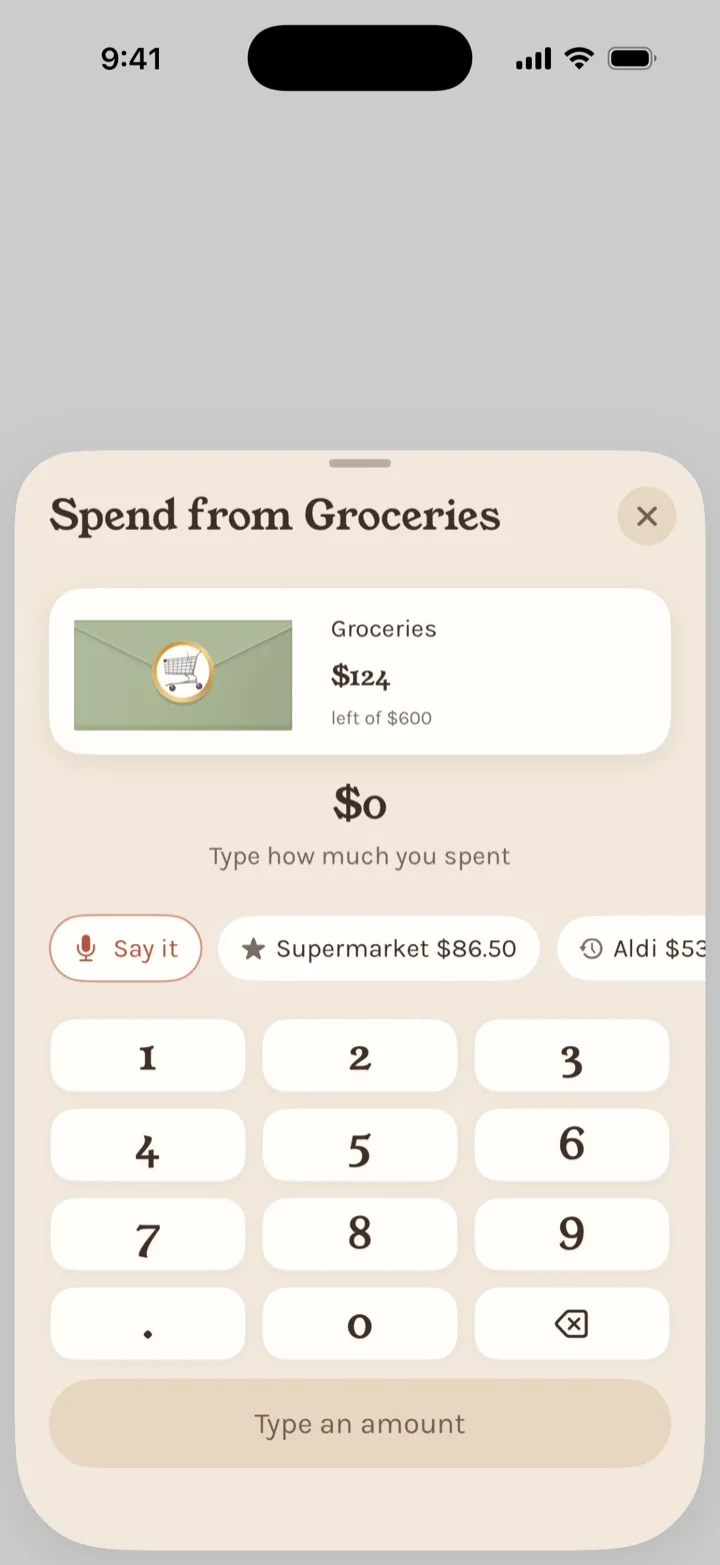
Each time you spend, take it from the matching envelope. With real cash you pay with the cash. With an app you log the spend against the envelope as you go: in Stuffed that's two taps, or hold Say it and say what you bought. Logging each spend yourself is the point. It's what makes you notice the $14 lunches.
Step 7: when an envelope runs out
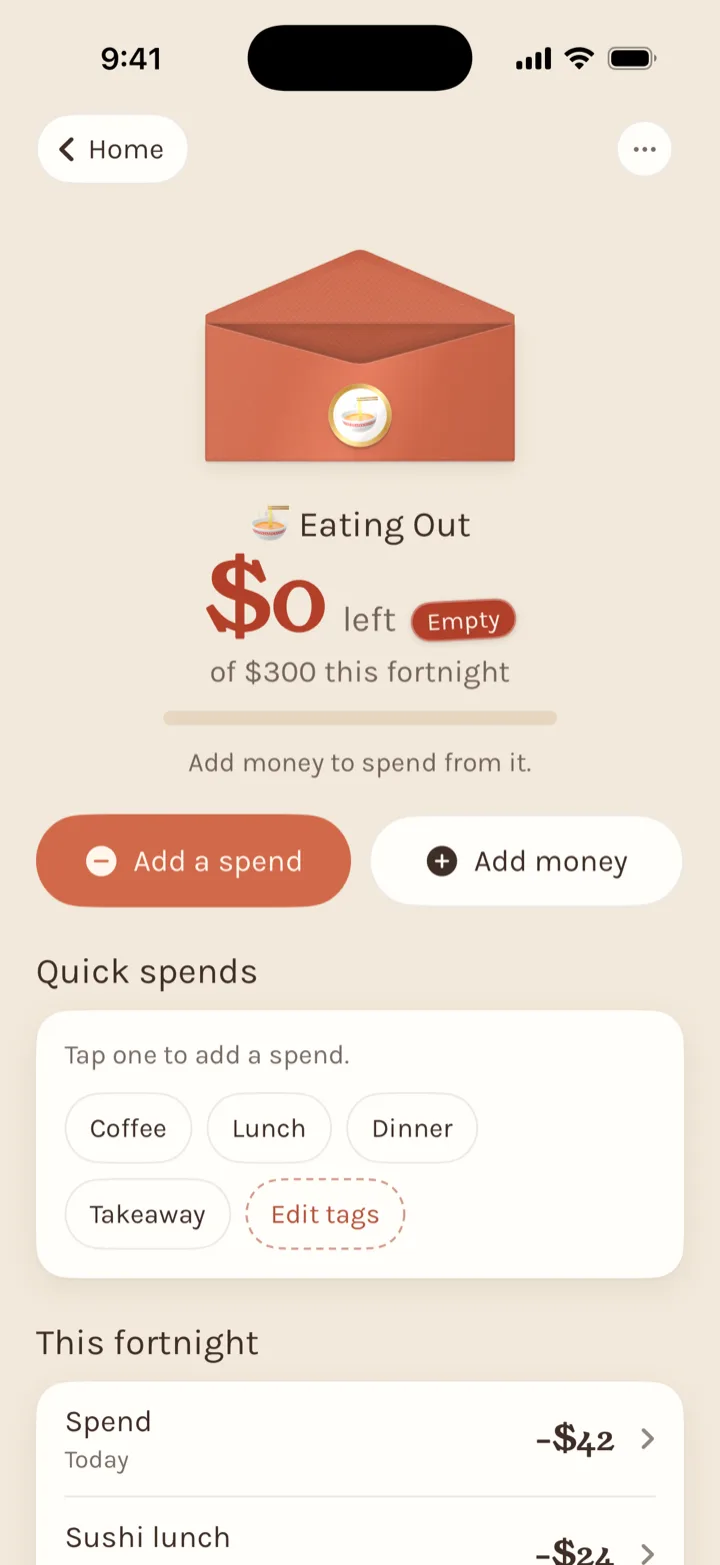
This is the moment cash stuffing is built for. You have two honest choices: wait for payday, or move money in from another envelope and accept that the other envelope now has less. Both are fine. What you avoid is spending anyway and pretending it didn't happen.
Step 8: adjust after your first pay period
Your first amounts are guesses, and some will be wrong. After a pay period or two, raise the envelopes that kept running out and trim the ones with money left over. Most people's budgets settle within a month or two.
Beginner mistakes to skip
- Too many envelopes. Merge until each one is a real decision.
- No Fun Money. Plan the treats so they don't break the budget.
- Forgetting the yearly bills. Car rego, Christmas and insurance arrive on schedule; save for them each payday with sinking funds.
- Quitting after one overspend. Move money, adjust the plan, keep going.
Real cash or an app?
Real cash gives you the physical limit of an empty envelope, which some people love. It gets awkward when most spending is by card, online or by direct debit: you withdraw cash just to stuff it, and bills never fit in an envelope. An app like Stuffed keeps the envelopes and the empty means empty rule, while your money stays in your bank.