Sinking funds, explained.
A sinking fund is money you put aside each payday for a cost you know is coming. Here's how to work out the amounts and set them up, so big bills stop feeling like emergencies.
Updated 21 October 2026
What a sinking fund is
Car rego, Christmas, the dentist, a holiday, the annual insurance bill. None of these are surprises; they just don't arrive every fortnight. A sinking fund saves a small amount each payday so the money is already there when the bill comes. It's the reason envelope budgeters don't need a credit card for December.
How much to put in each payday
Divide the cost by the number of paydays until it's due.
| Sinking fund | Cost and timing | Each fortnight |
|---|---|---|
| Car rego | $900, due in a year (26 pays) | $34.62 |
| Christmas | $600, ten fortnights away | $60 |
| Dentist | $400 a year | $15.38 |
| Holiday | $2,400, in 16 fortnights | $150 |
If you're starting late and the amount is too big, save what you can now and spread the gap over the next cycle. Starting late beats not starting.
Sinking fund, emergency fund, or savings goal?
- Sinking fund: a known cost, a known date. You will spend it.
- Emergency fund: for the unknown: a job loss, a broken fridge. You hope never to spend it.
- Savings goal: something you choose to save towards, like a holiday or a deposit. Often a sinking fund with a target.
Two ways to set them up in Stuffed
For bills you'll pay from: make an envelope and choose Add to it, so it builds up each payday instead of being topped up to a limit. When the rego notice arrives, spend it from that envelope like any other.
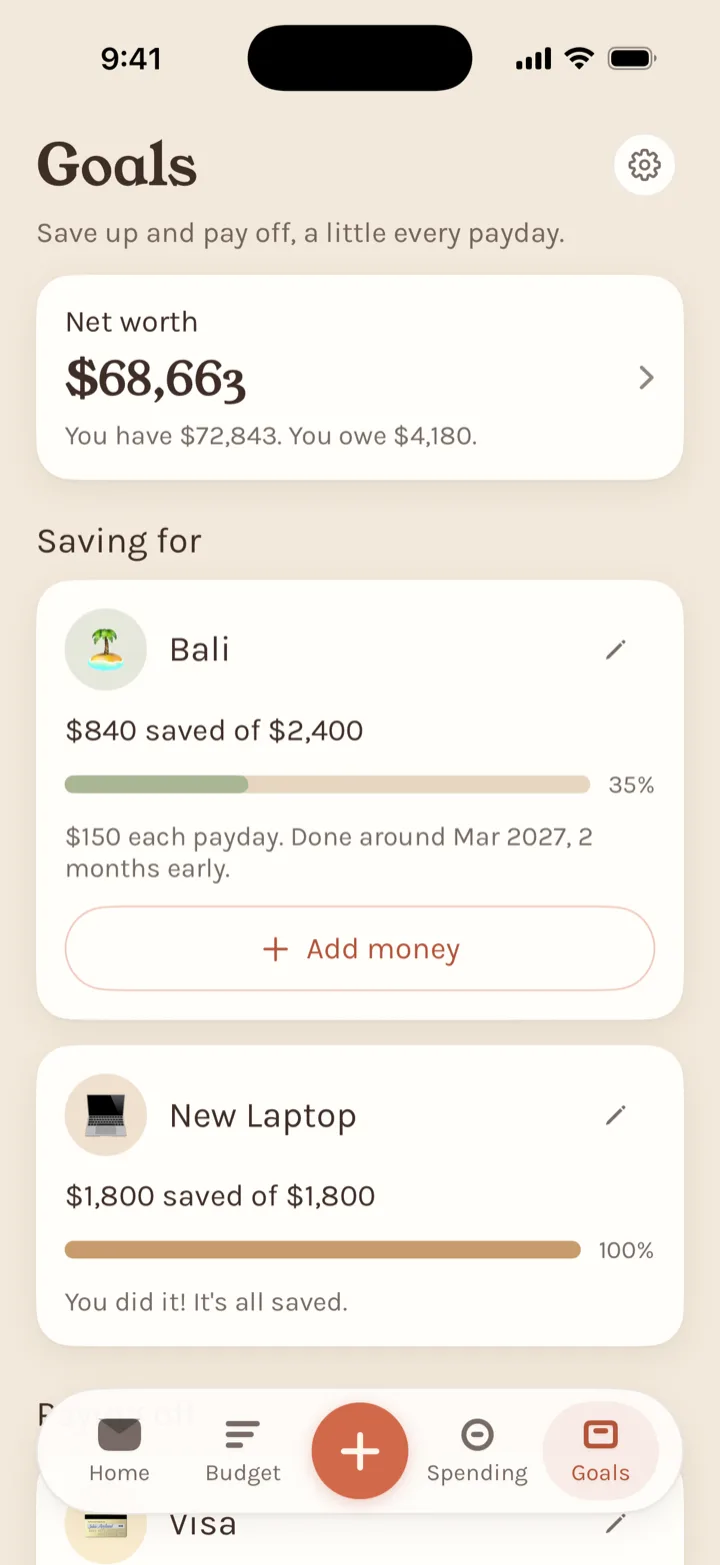
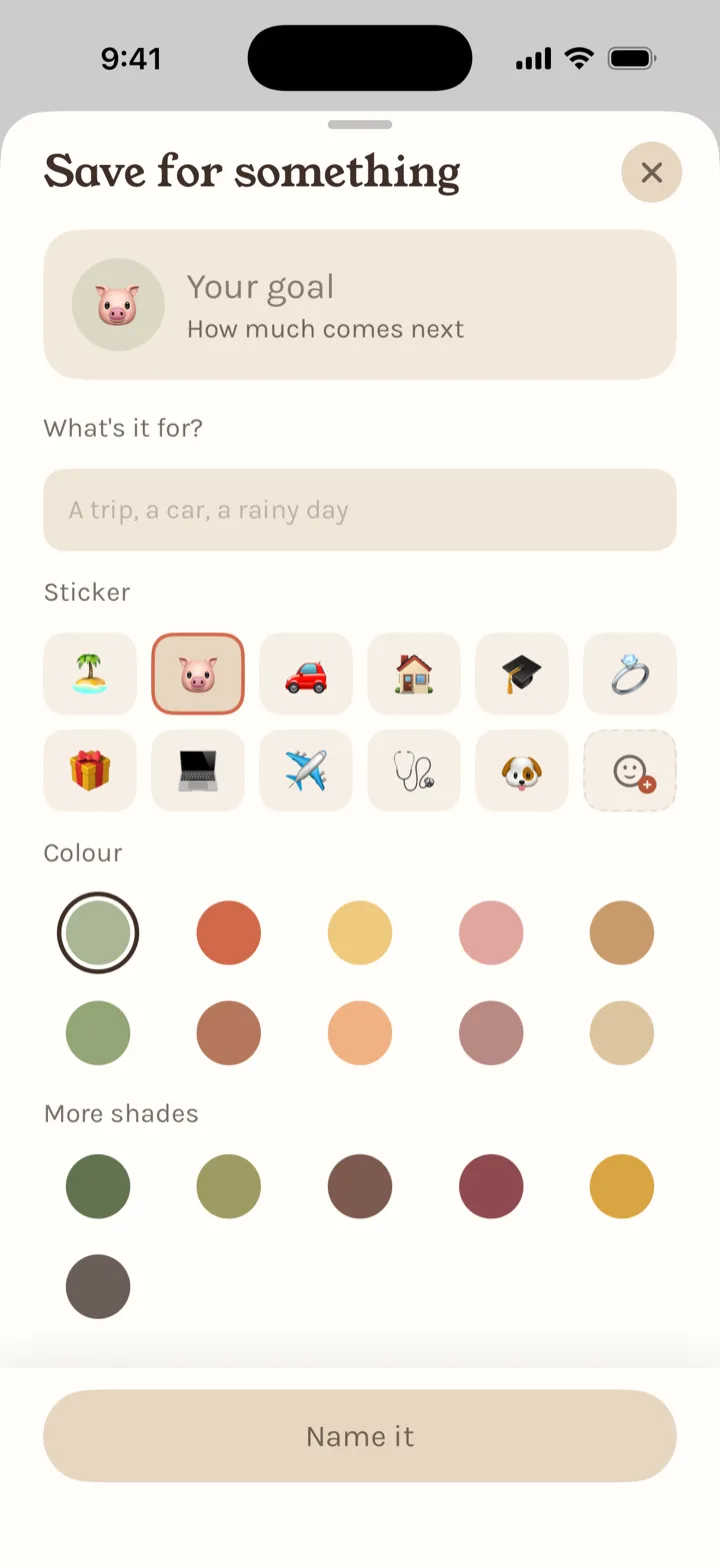
For something with a target: make a goal. Give it a total and an amount each payday, and Stuffed tells you roughly when you'll get there. In the example, Bali has $840 of $2,400 saved at $150 a payday, done around March 2027. Birthday money or a refund can go straight in with Add money.
Tips that make them stick
- Start with the two or three bills that hurt most. Usually car, Christmas and an annual bill.
- Fund them on payday, before the everyday envelopes. Leftovers never come.
- Don't raid them for everyday spending. If you must, write down what you borrowed and pay it back next payday.
- Check twice a year that the amounts still match the real bills.